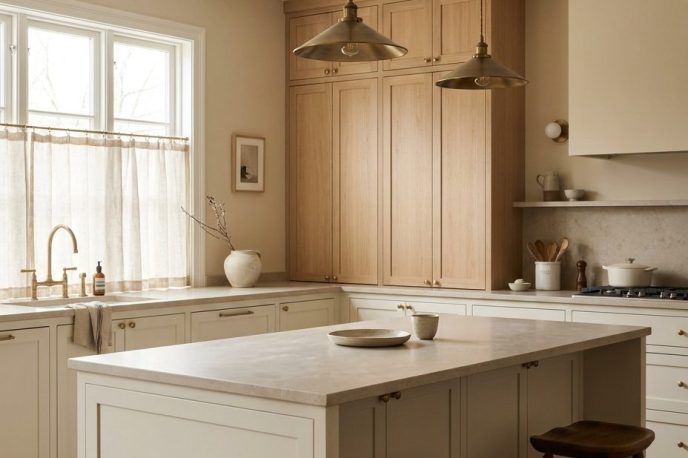
Paint is the cheapest decision in a renovation and the one clients lose the most sleep over. Part of that is because a white is never just a white: it is a white in a particular room, at a particular hour, next to a particular floor.
North-facing rooms take cool light all day, which will pull a crisp white toward grey and make a warm one look almost yellow at noon. South-facing rooms do the opposite. Before we specify anything, we paint two-foot boards and leave them in the room for a full day — morning, afternoon, and under the lamps you'll actually use at night.
Start with the floor, not the wall
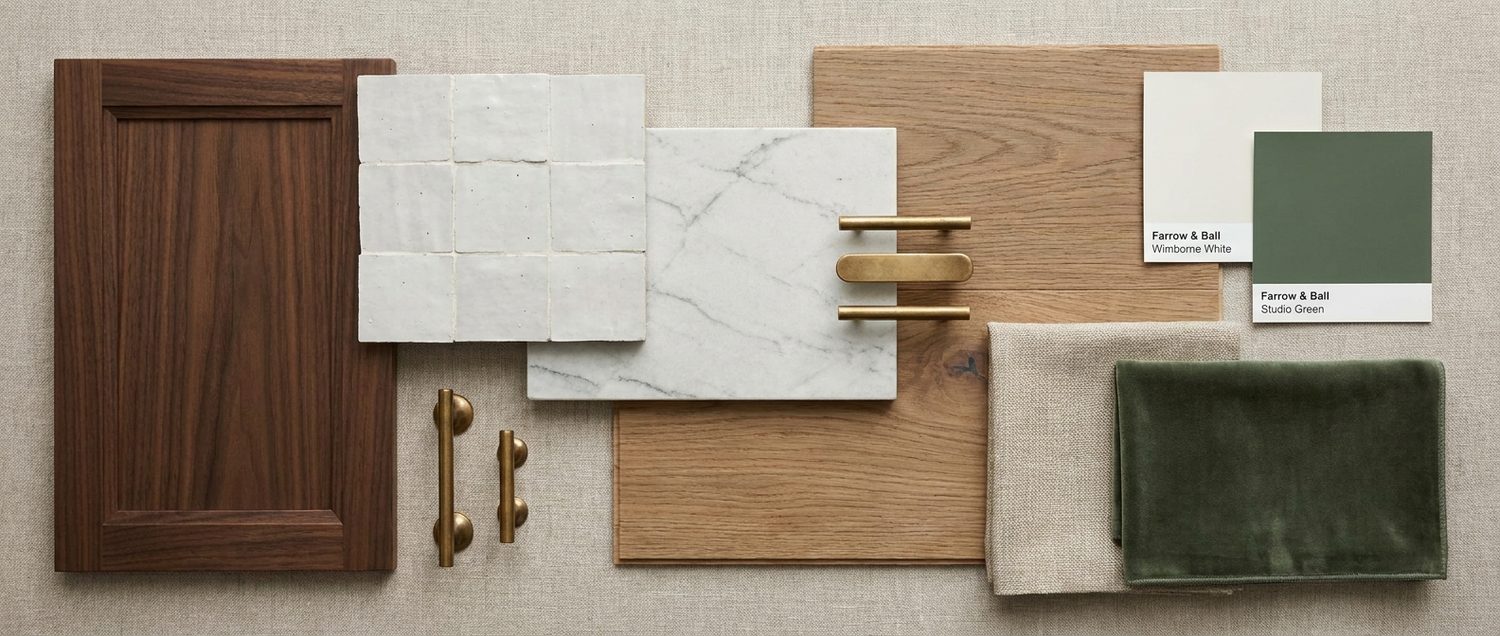
The largest fixed surface in the room sets the temperature of everything else. Red oak pushes warm, white oak sits neutral, and honed limestone reads cool no matter how much sun it gets. Choose the white against that surface, in place, and half the guesswork disappears.
If a white looks perfect on the sample card, it is almost certainly wrong for the room.
The second mistake is sheen. A flat white on a hallway wall in a house with children will be repainted within a year; an eggshell in the same spot will not. We use flat on ceilings, eggshell on walls, and satin on trim, with one exception: bathrooms, where everything goes up a step.
The short list
Four warm whites for south light, four cool ones for north, two that behave in almost any room, and two off-whites we use when a space needs to feel older than it is. The full list, with rooms and sheens, is in the paint guide below.